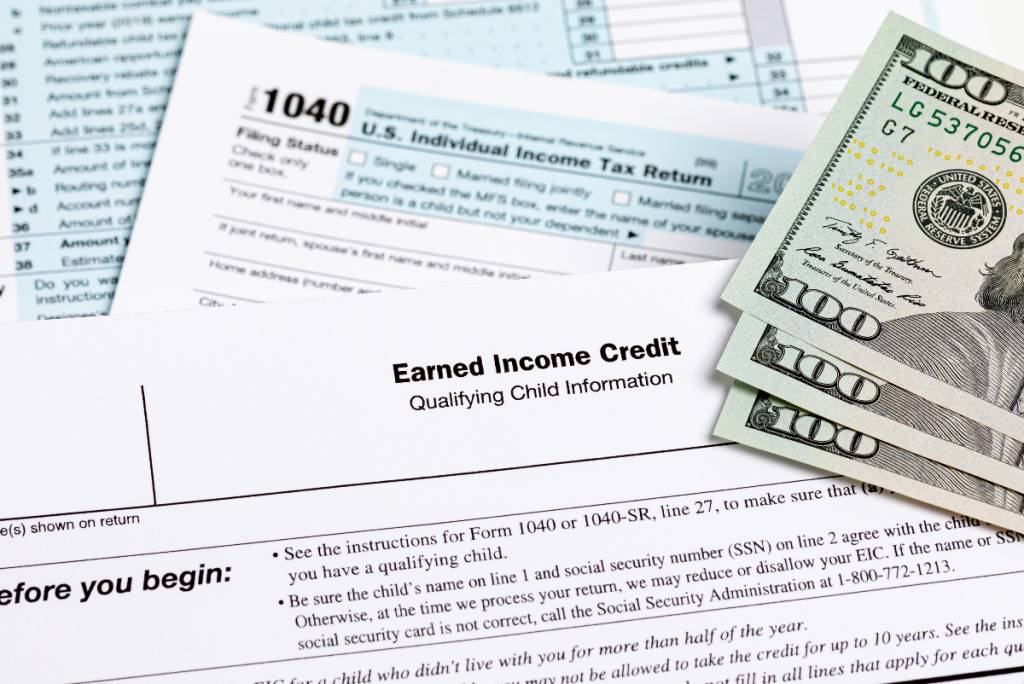

A little breathing room in the budget? That’s something plenty of Dallas residents could appreciate. And for eligible workers and families, a federal tax credit could mean a refund worth thousands.
The Earned Income Tax Credit, or EITC, offers qualifying households up to $8,046 for tax year 2025—the return generally filed in 2026. How much you could receive depends on your income, filing status and number of qualifying children.
Before you start making plans for that money, there’s an important distinction: this isn’t a new stimulus check or a Texas-only payout. It’s a federal tax benefit claimed through your tax return, with direct deposit simply serving as a way to receive any resulting refund.

What is the Earned Income Tax Credit?
The EITC gives low- and moderate-income workers a potential financial boost by reducing the federal income tax they owe and, in some cases, increasing their refund.
Because the credit is refundable, eligible taxpayers could receive money back even if they don’t owe federal income tax.
You do, however, need to file a federal tax return to claim it—even if you wouldn’t otherwise be required to file. Dallas residents qualify under the same federal rules as eligible workers elsewhere in the country.
How much could Dallas residents receive?
The largest credit is available to eligible households with three or more qualifying children. But smaller families—and some workers without children—could qualify, too. Here are the maximum amounts for tax year 2025, per qualifying children:
- None: $649
- One: $4,328
- Two: $7,152
- Three or more: $8,046
These are maximum amounts, not guaranteed deposits. Your actual credit depends on your circumstances, and earning less than the income limit doesn’t automatically mean you’ll receive the largest payment.
Seen a $7,830 figure in similar headlines? That was the maximum for tax year 2024. The $8,046 maximum applies to tax year 2025, so checking the tax year matters when working out what you might qualify for.
Who qualifies for the credit?
There’s no Dallas-specific application or extra payment simply for living in Texas. Eligibility comes down to the IRS’s federal requirements, which include:
- Having earned income from work or self-employment.
- Having earned income and adjusted gross income below the limits for your filing status and number of qualifying children.
- Having investment income of no more than $11,950 for tax year 2025.
- Having a valid Social Security number by the return’s due date, including extensions.
- Generally being a US citizen or resident alien throughout the tax year.
- Not filing Form 2555, which relates to foreign earned income.
Additional rules apply to some taxpayers, including people who are separated from their spouse and aren’t filing jointly.
Can you qualify if you don’t have children?
Yes—parents aren’t the only people who could benefit.
Eligible workers without qualifying children can receive up to $649 for tax year 2025. Generally, they must be at least 25 but under 65 at the end of the tax year and meet the other eligibility requirements. For married couples filing jointly, at least one spouse must meet that age requirement.
If you’re claiming with children, the IRS applies specific tests covering relationship, age, residency and joint-return status. Generally, a qualifying child must have lived with you in the United States for more than half the tax year.
In other words, listing someone as a dependent doesn’t automatically mean they qualify for the EITC.
How do you claim it—and when could your refund arrive?
You claim the EITC by filing a federal income tax return. Before submitting yours, the IRS’s EITC Assistant can help you work through the eligibility requirements.
If your return results in a refund, you can request direct deposit. Just don’t mistake eligibility for an immediate payment: there’s no single deposit date for everyone, and returns claiming the EITC are subject to special IRS refund-timing rules.
Already filed in a previous year and think you missed the credit? You may still have time to check. The IRS generally allows three years from a return’s due date to file and claim a refund, subject to the applicable rules.